Books

Call for Abstracts for Edited Volume Language and Food: Macro, Meso and Micro Analysis of Food Discourse

Editors: Takako Kawabata tk70@soas.ac.uk Daniela Cesiri daniela.cesiri@unive.it Call for Abstracts Overview and scope Language and food both function as semiotic systems that rely on shared conventions to convey meaning and to organize social life. As Roland Barthes (2008: 24) argued, food is not simply nourishment but “a system of communication, a body of images, a protocol of usages, situations, and behavior.” In much the same way, language is never a neutral tool. It structures perception, mediates social relationships, and encodes the values, hierarchies, and ideologies of a community. Eating, just like a form of communication such as language, is therefore always both a material and a symbolic act. The parallels between language and food extend across social, cultural, and political dimensions. Both are shaped by norms that define what counts as appropriate, authentic, refined, or desirable. Bourdieu’s (1984) work on taste demonstrates how linguistic and culinary preferences function as forms of cultural capital, marking social distinction and reproducing inequality. Accents, registers, and genres may index prestige in language, just as particular cuisines, ingredients, or eating practices do in food cultures. Language and food are also powerful resources for identity-making (Gordon & Tovares, 2024). Through the ways in which people speak about food, choose what to eat, and represent culinary practices, individuals and communities express belonging, difference, and hybridity. As Appadurai (1981) and Cabral et al. (2025) argue, gastro-politics highlights how food practices are deeply entangled with power, nationalism, and globalization, while sociolinguistic work on style and performance shows how identities are actively produced through linguistic choices (Coupland, 2007). These processes are especially visible in contexts of migration, tourism, media circulation, and cultural branding, where food and language travel together and acquire new meanings in order to shape a certain image of the destination and, thus, attract the prospective visitor’s or customer’s attention. The relationship between language and food begins early in life, when cries and gestures signal hunger and comfort, and continues throughout adulthood in everyday practices of shopping, cooking, ordering, evaluating, and sharing food. Genres of food discourse, ranging from family mealtime conversations to restaurant menus, cookbooks, television shows, and online reviews, shape how taste, authenticity, health, and value are understood (Gerhardt, 2013). As Barthes (2008) again notes, food-related meanings must be studied wherever they appear, in economic practices, technologies, advertising, and in the mental and symbolic life of society. Both language and food are dynamic and constantly changing. They are reshaped through contact, migration, and media, and they circulate within broader political and economic structures. The borrowing of words parallels the blending of cuisines, while discourses of “proper language” and “authentic food” often serve to legitimize certain norms and marginalize others. This fluidity challenges static understandings of culture and value and calls for a process-oriented approach to meaning-making that accounts for circulation, contestation, and change (Järlehed & Moriarty, 2018). Bringing these domains together, the interdisciplinary field of language and food studies examines how practices of speaking, writing, and representation intersect with practices of eating, cooking, and sharing (Riley & Paugh, 2018). At a global scale, food discourse plays a central role in constructing cultural identity, nationalism, and belonging. Cuisines are marketed as authentic for tourism, culinary terms move across languages, and food metaphors permeate political speech and everyday idioms. As researchers demonstrate, food circulates alongside discourse, shaping values and power relations at both local and global levels (Scarpato & Daniele, 2004). This edited volume aims to advance and consolidate the growing field of language and food studies by bringing together interdisciplinary perspectives from linguistic anthropology, sociolinguistics, discourse studies, food studies, cultural studies, and communication research. The volume explores the co-constitutive relationship between language and food and examines how they jointly produce, circulate, and transform meaning and value in social life (Karrebæk et al., 2018). Food is approached not only as a material object or cultural practice, but also as a communicative resource through which identities, emotions, moral positions, and political stances are expressed. The main aims of the volume are fourfold. First, it seeks to consolidate scholarship on language and food by showcasing a wide range of empirical and theoretical approaches. Second, it aims to foster dialogue across disciplines by building conceptual bridges between sociolinguistics, linguistic anthropology, discourse studies, and food studies. Third, it foregrounds global and multilingual perspectives, highlighting case studies from diverse cultural and linguistic contexts. Finally, the volume aims to serve as a valuable resource for scholars, students, and practitioners interested in how language and food intersect in everyday life, institutions, and global processes. What We’re Looking ForWe invite contributions that analyze food discourse at the micro, meso, and/or macro levels. We welcome both empirical and theoretical works that reflect a wide range of approaches and methods. Contributions from all relevant disciplines are encouraged, including linguistics, sociology, political science, economics, tourism studies, and ecology. Possible topics include, but are not limited to, the following: Micro Level: Producers, Consumers, and IndividualsThis level focuses on how individuals and small groups produce, interpret, and negotiate food-related meanings through language in specific contexts, such as:• Everyday food talk (ordering, tasting, evaluating, recommending)• Language, taste, and sensory experience• Food, emotion, affect, and memory• Storytelling around food• Identity performance through food discourse• Digital food practices (reviews, vlogs, and social media posts)• Multilingual and intercultural food practices Meso Level: Institutions, Organizations, and CommunitiesThis level examines how institutions and communities shape, regulate, mediate, and standardize food-related discourse, such as:• Community-based food practices• Professional and institutional food discourse• Norms, expertise, and authority in food communication• Heritage food organizations and certification bodies• Alternative food networks• Media and mediated representations• Media genres (menus, cookbooks, food journalism, television shows) Macro Level: Ideologies, Histories, and PoliciesThis level addresses how food-related meanings are shaped by broader ideological, historical, and political-economic forces, often operating across borders and over time, such as:• Heritage, authenticity, and tradition• Political economy of food• Governance, regulation, and power• Food in nationalist, populist, and geopolitical discourse• Colonial and postcolonial food histories• Migration, globalization, and cultural identity• Crisis, sustainability, and environmental discourses Submission GuidelinesPlease submit an
Call for Abstracts for Edited Volume Language and Food: Macro, Meso and Micro Analysis of Food Discourse Read More »

New book: Pharmaceutical Discourse in English and Italian: A Corpus-Based Comparative Study

Nicola Pelizzari, Pharmaceutical Discourse in English and Italian: A Corpus-Based Comparative Study Cambridge Scholars Publishing, pp. 291. ISBN: 1-0364-6224-2 This monograph investigates how language shapes patient understanding in pharmaceutical communication, focusing on patient information leaflets (PILs) in the UK and Italy. Through a corpus-based comparative analysis of over-the-counter and prescription PILs, the book systematically examines key linguistic features – including modality, passive constructions, sentence length, and specialised terminology – and evaluates their potential implications on readability and accessibility. Combining quantitative frequency analysis with close qualitative examination, the study highlights significant cross-linguistic differences in the structure and presentation of medical information. It also explores how national regulatory frameworks influence linguistic choices and how these, in turn, affect patient comprehension. At a methodological level, the book illustrates how corpus-based approaches can be used to investigate complex specialised genres systematically. It also demonstrates how shared communicative aims are realised through different lexico-grammatical configurations across languages and sub-genres, highlighting the interplay between regulatory conventions, medical register, and accessibility concerns. By bringing applied linguistics into dialogue with health communication, the book exposes the communicative tensions between legal compliance and patient-centredness. It argues for more linguistically informed policies and advocates for interdisciplinary collaboration in the production of public-facing medical texts. This work will be of interest to researchers in corpus linguistics, discourse analysis, and medical communication, as well as to professionals involved in pharmaceutical writing, public health, and health policy development.

New book: Pharmaceutical Discourse in English and Italian: A Corpus-Based Comparative Study Read More »

AIA Interviews Series – Carolina Celeste Granini interviews Daniela Cesiri

AIA INTERVIEWS SERIES January 2026 In this video of the AIA Interviews series, Carolina Celeste Granini speaks with Daniela Cesiri about her latest book, Communicating Food to Children: Linguistic and Socio-Cultural Perspectives. You can find Daniela Cesiri’s book here

AIA Interviews Series – Carolina Celeste Granini interviews Daniela Cesiri Read More »

Michele Stanco, Shakespeare: uomo di teatro, uomo di lettere, Roma, Carocci, 2025, 194 pp.

Gli studi shakespeariani sono in costante trasformazione. Metodologie di ricerca nuove, quali l’informatica umanistica, e la maggiore facilità di accesso a corpora testuali sempre più ampi hanno profondamente ridisegnato la nostra conoscenza dell’autore. Di qui la necessità di fornire uno strumento di studio aggiornato, che tenga conto delle più recenti acquisizioni relative alla ricostruzione dei testi, alla formazione del canone (con l’annessa questione dei collaborative plays), alla cronologia delle opere. Nel proporre una guida generale, il volume non rinuncia, tuttavia, a confrontarsi con una serie di problemi di carattere più specialistico. Un’ampia sezione ridiscute la vexata quaestio dei generi drammatici, analizzando il “comico” e il “tragico” alla luce delle diverse visioni del mondo ivi sottese. La sezione sulla poesia, a sua volta, rivisita le questioni relative alla cronologia dei Sonnets, e ai legami tra l’opera drammatica e l’opera poetica. Ad arricchire il quadro, il capitolo finale (attraverso un caso di studio su Edward III) riesamina il rapporto dell’autore con la pagina scritta, suggerendo che, oltre che per gli spettatori dell’epoca, Shakespeare scriveva anche per un pubblico di lettori sia presenti che futuri, rivelandosi, al contempo, uomo di teatro e uomo di lettere. Il risultato è un volume completo, di agile consultazione, che non si limita a fornire il necessario materiale informativo, ma offre altresì gli strumenti metodologici utili a cogliere, dall’interno, i fenomeni di volta in volta esplorati. Michele Stanco, Shakespeare: uomo di teatro, uomo di lettere, Roma, Carocci, 2025, 194 pp. Gli studi shakespeariani sono in costante trasformazione. Metodologie di ricerca nuove, quali l’informatica umanistica, e la maggiore facilità di accesso a corpora testuali sempre più ampi hanno profondamente ridisegnato la nostra conoscenza dell’autore. Di qui la necessità di fornire uno strumento di studio aggiornato, che tenga conto delle più recenti acquisizioni relative alla ricostruzione dei testi, alla formazione del canone (con l’annessa questione dei collaborative plays), alla cronologia delle opere. Nel proporre una guida generale, il volume non rinuncia, tuttavia, a confrontarsi con una serie di problemi di carattere più specialistico. Un’ampia sezione ridiscute la vexata quaestio dei generi drammatici, analizzando il “comico” e il “tragico” alla luce delle diverse visioni del mondo ivi sottese. La sezione sulla poesia, a sua volta, rivisita le questioni relative alla cronologia dei Sonnets, e ai legami tra l’opera drammatica e l’opera poetica. Ad arricchire il quadro, il capitolo finale (attraverso un caso di studio su Edward III) riesamina il rapporto dell’autore con la pagina scritta, suggerendo che, oltre che per gli spettatori dell’epoca, Shakespeare scriveva anche per un pubblico di lettori sia presenti che futuri, rivelandosi, al contempo, uomo di teatro e uomo di lettere. Il risultato è un volume completo, di agile consultazione, che non si limita a fornire il necessario materiale informativo, ma offre altresì gli strumenti metodologici utili a cogliere, dall’interno, i fenomeni di volta in volta esplorati.

Michele Stanco, Shakespeare: uomo di teatro, uomo di lettere, Roma, Carocci, 2025, 194 pp. Read More »

AIA Interviews Paolo D’Indosinante discusses with Silvia Pettini her book on The Translation of Realia and Irrealia in Game Localization (AIA Junior Book Prize 2024)

In this video of the AIA Interviews series, Paolo D’Indinosante speaks with Silvia Pettini about her latest book, “The Translation of Realia and Irrealia in Game Localization: Culture-Specificity between Realism and Fictionality”, recipient of the AIA Junior Book Prize.

AIA Interviews Paolo D’Indosinante discusses with Silvia Pettini her book on The Translation of Realia and Irrealia in Game Localization (AIA Junior Book Prize 2024) Read More »

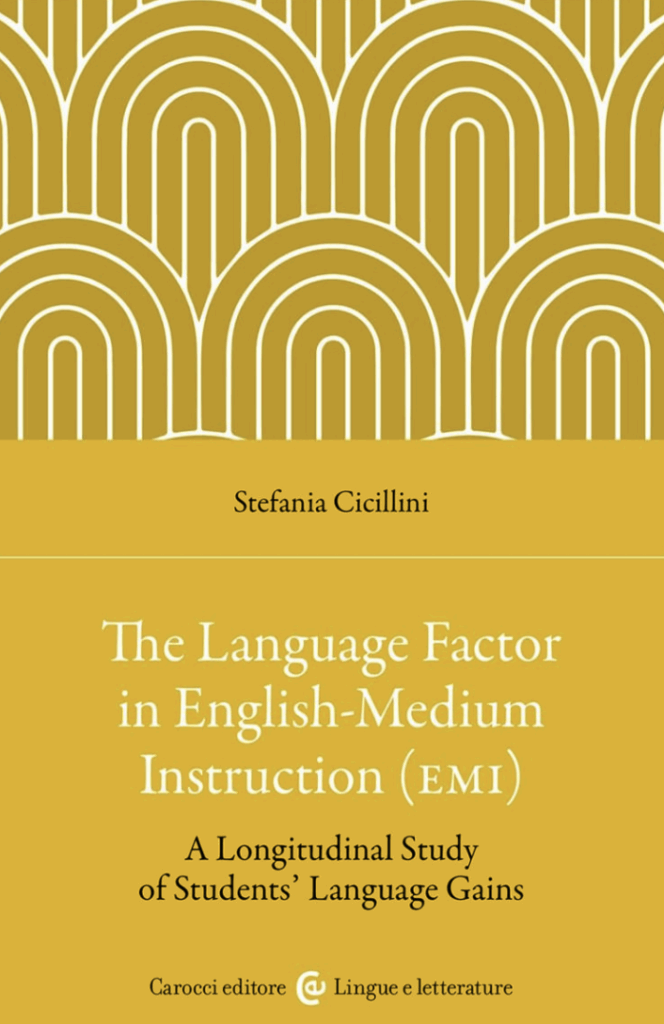
New book: Stefania Cicillini, The Language Factor in English-Medium Instruction (EMI). A Longitudinal Study of Students’ Language Gains, Roma, Carocci, 2025

This volume deals with a crucial, but underestimated, dimension of English-medium instruction (EMI) in higher education, namely the students’ language experience and the improvement in English proficiency, the latter being one of the key motivating factors to opt for EMI. The mixed-method case study presented in this volume is a longitudinal investigation of the participants’ language progress, spanning over two academic years. Although English language outcomes are neither mentioned in the definitions of EMI nor in the courses’ syllabi, indeed, the EMI experience provides a large amount of language input for students, which is both assimilated consciously and partly as a result of incidental language learning. On reviewing previous literature on EMI, this book addresses some key questions such as the impact of EMI on the students’ English skills, the increase of proficiency while focused on subject-oriented activities and in particular whether English improvement is voluntary or incidental. The data retrieved from questionnaires and language tests administered to one-hundred medical students enrolled in an Italian university provide valuable insights into the language factor in EMI, which may be usefully exploited and extended to other higher educational contexts.  Stefania Cicillini, The Language Factor in English-Medium Instruction (EMI). A Longitudinal Study of Students’ Language Gains, Roma, Carocci, pp. 208 ISBN: 9788829024292, Pp. 208 

New book: Stefania Cicillini, The Language Factor in English-Medium Instruction (EMI). A Longitudinal Study of Students’ Language Gains, Roma, Carocci, 2025 Read More »

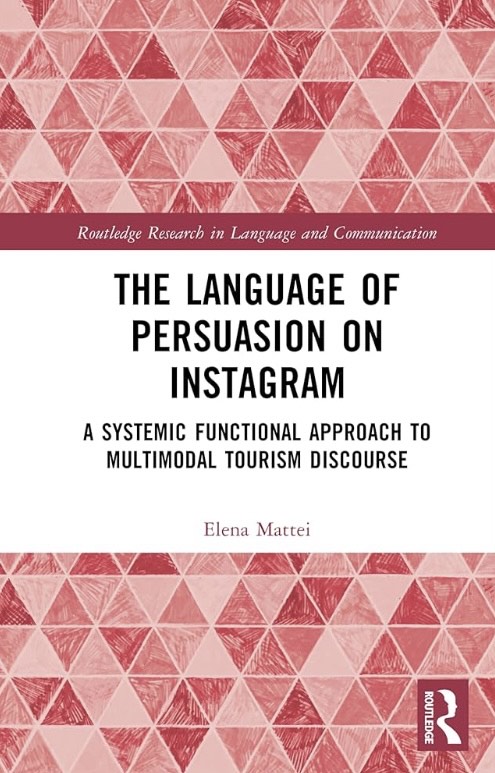
New Book: Elena Mattei, The Language of Persuasion on Instagram. A Systemic Functional Approach to Multimodal Tourism Discourse, Routledge, 2025

This book offers a systematic, interdisciplinary investigation into the language of persuasion in contemporary tourism discourse, with a focus on English-language travel boards’ use of Instagram and official websites. Drawing on Corpus Linguistics and Systemic Functional Linguistics, it examines how linguistic and visual resources are strategically deployed to construct idealized representations of destinations and evoke positive emotional responses. Through a multimodal analysis, the volume explores recurring linguistic patterns, the role of platform-specific dissemination, and how discourse constructs power dynamics between destinations and prospective tourists. By combining empirical methods with critical discourse and sociological perspectives, the book sheds light on how emotionally charged, consumer-oriented narratives may reinforce broader socioeconomic inequalities and contribute to unsustainable travel practices. In doing so, it contributes to ongoing debates on digital persuasion and literacy, media framing, and the ideological function of tourism communication, recommending approaches to integrate data-driven, highly persuasive strategies and eco-sensitive narratives. This book will be of interest to scholars and students in discourse analysis, digital communication, tourism studies, marketing, and linguistics, as well as professionals interested in the mechanisms behind strategic, promotional narratives and their potential impact on social and environmental sustainability. Elena Mattei, The Language of Persuasion on Instagram. A Systemic Functional Approach to Multimodal Tourism Discourse. Routledge  ISBN 9781032937489   288 Pages 44 B/W Illustrations

New Book: Elena Mattei, The Language of Persuasion on Instagram. A Systemic Functional Approach to Multimodal Tourism Discourse, Routledge, 2025 Read More »

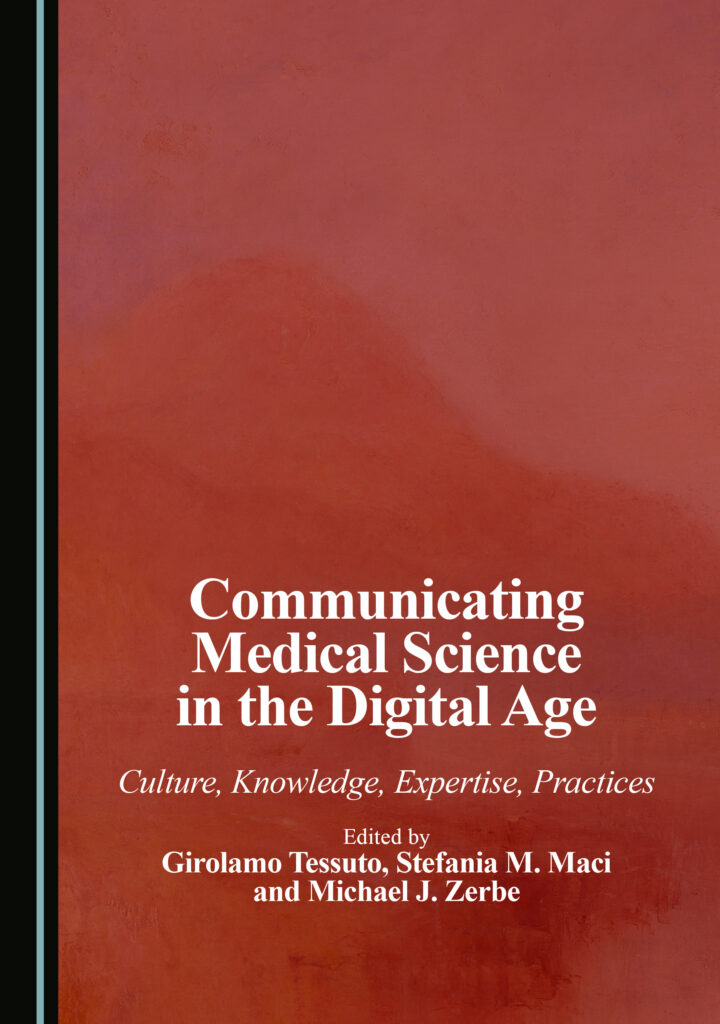
New Publication: Communicating Medical Science in the Digital Age: Culture, Knowledge, Expertise, Practices edited by G. Tessuto, S. M. Maci, M. J. Zerbe, Cambridge Scholars, 2025

Communicating Medical Science in the Digital Age: Culture, Knowledge, Expertise, Practicesedited by G. Tessuto, S. M. Maci, M. J. Zerbe, Cambridge Scholars, June 2025 The rapid development of the Internet and social media platforms hastransformed the landscape of medical science communication where avariety of societal stakeholders, including the research academy,healthcare professionals, policymakers, and patients, increasingly turn tothe readily usable functionalities of online information and knowledgeplatforms. This transformation has had a significant impact on digitalcommunication within the medical academy and the healthcare sector asa whole. Opportunities are spawning an increasingly diverse digitalecosystem of less formal practices of medical scholarly communicationon web and social media platforms (research blogs, tweets, newspaperarticles, press interviews, ResearchGate, WikiPathways, info-graphicsand video-abstracts), making the scientific process more democratic andresponsive to societal needs and fostering ‘open’, rapid scientificcommunication between researchers, citizens, and other societal actors.This book brings together academics and practitioners from the area oflinguistics and other fields to critically discuss and rethink emergingtrends and variations in medical science communication models whereculture, knowledge, expertise, and identity are played out, contributing tothe discursive study of texts and genres that matter to internal and externalprocesses and practices of medical science communication This book is part of a series. View the full series, “Medical Discourse and Communication”, here. ISBN: 1-0364-4566-6 ISBN13: 978-1-0364-4566-9 Pages: 398 Cambridge Scholars Publishing https://www.cambridgescholars.com/product/978-1-0364-4566-9

New Publication: Communicating Medical Science in the Digital Age: Culture, Knowledge, Expertise, Practices edited by G. Tessuto, S. M. Maci, M. J. Zerbe, Cambridge Scholars, 2025 Read More »

Esterino Adami, Postcolonial Stylistics, Routledge, 2025, pp 242. ISBN: 9781032740898 (paperback/hardback/ebook)

https://www.routledge.com/Postcolonial-Stylistics/Adami/p/book/9781032740898 This accessible introduction to postcolonial stylistics looks at the shared aims of stylistics and postcolonial studies and illustrates how to apply the analytical and theoretical tools of stylistics to a selection of literary and non-literary texts from a range of English-speaking postcolonial contexts. Structured around the five keywords of Language, Identity, Belonging, History, and Ecology, the book: Comprehensive in its coverage and assuming no prior knowledge of the topics considered, the book adopts an interactive and activity-based approach to develop readers’ understanding of linguistic structures and forms through postcolonial texts. Offering a new interdisciplinary perspective, this is essential reading for students new to stylistics and postcolonial literature.

Esterino Adami, Postcolonial Stylistics, Routledge, 2025, pp 242. ISBN: 9781032740898 (paperback/hardback/ebook) Read More »

Torna in alto